 Tower Academy.
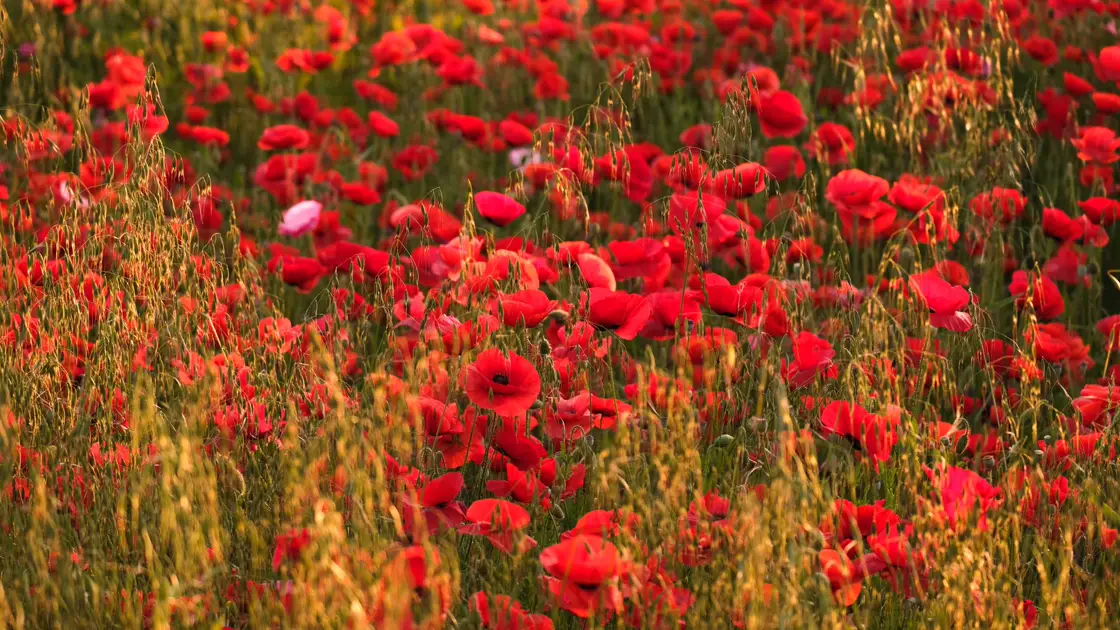
Watch British TV in early November and you'll notice something strange: almost everyone - newsreaders, footballers, politicians - has a small red flower on their jacket. It's a poppy, and it has a lot to do with a date that is very important for Poles too: 11 November. 🌺
🕚 The eleventh hour
On 11 November 1918, at 11 o'clock in the morning, the guns of the First World War finally went quiet. Germany and the Allies had signed an armistice - an agreement to stop fighting. "The eleventh hour of the eleventh day of the eleventh month" became a moment the British still stop for every year.
In the UK, this day is called Remembrance Day (or Armistice Day). It's not a day off - people go to work and school as usual. But at 11 a.m., everything stops for a two-minute silence. Trains, shops, offices, even the London Stock Exchange.
🌺 Why poppies?
The fields of Flanders, in Belgium, saw some of the worst battles of the war. After the fighting, the ground was destroyed - and then thousands of red poppies started to grow on it. A Canadian doctor, John McCrae, wrote a poem about them in 1915. It begins:
In Flanders fields the poppies blow
Between the crosses, row on row...
The poem became famous, and the red poppy became the symbol of soldiers who died in war. Since 1921, the Royal British Legion has sold paper poppies to help veterans and their families. People wear a poppy from the end of October until 11 November.
On Remembrance Sunday - the Sunday closest to 11 November - the King and politicians lay wreaths of poppies at the Cenotaph, a war memorial in central London. You'll often hear the words "Lest we forget" - an old way of saying "so that we never forget".
🇵🇱 Meanwhile, in Poland...
For Poles, 11 November 1918 means something completely different. After 123 years of partitions between Russia, Prussia and Austria, Poland regained independence. On that day, Józef Piłsudski took command of the Polish army in Warsaw - and Poland came back on the map of Europe.
So in Poland, 11 November is a national holiday and a day off. People hang flags, go to parades, run in Independence Day races, and in Poznań they eat rogale świętomarcińskie - huge croissants with white poppy seeds, because 11 November is also St Martin's Day. Poppies again, in a way! 🥐
🤝 Same date, two feelings
It's the same day in history, but the mood is different. The British commemorate - they are quiet and remember the people who died. Poles celebrate - they're proud of getting their country back. Both countries pay tribute to the soldiers. And if you're in London on 11 November, now you know why the whole city suddenly goes silent at 11 o'clock.
Quick quiz
Complete the sentences with one word.
- At 11 a.m. the British stop for a two-minute ______.
- In 1918 the two sides signed an ______ and stopped fighting.
- The King lays a ______ of poppies at the Cenotaph.
- In 1918 Poland ______ its independence.
- "Lest we ______" means "so that we never forget".
Show answers
- silence
- armistice
- wreath
- regained
- forget
Your turn!
How do you spend 11 November? A parade, a run, rogale - or just a day off on the sofa? Tell us in the comments - in English! 👇🇵🇱